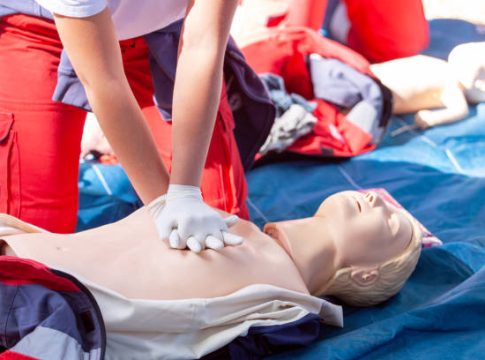
Anyone who has held a standard CPR card knows the routine: certify, mark the renewal date, and repeat every one to two years. For people who don’t need certification tied to a specific job requirement, that recurring cycle can feel unnecessary, which is why a growing number of general public learners are looking into lifetime CPR certification instead. Understanding exactly what “lifetime” means in this context, and what it doesn’t, is the key to choosing the right option.
Who This Option Actually Fits
A lifetime certificate is generally best suited for people who want CPR knowledge for personal readiness rather than professional compliance. Parents, grandparents, babysitters, and caregivers fall squarely into this category, since their goal is being prepared to respond in a home emergency rather than satisfying an employer’s documentation requirement. Fitness enthusiasts and members of the general public who simply want foundational lifesaving skills also tend to gravitate toward this format. By contrast, healthcare professionals, childcare licensees, and others in roles where CPR certification is a condition of employment or licensure typically need to follow whatever renewal schedule their employer or state board specifies, regardless of what any individual course offers.
What “Lifetime” Actually Covers
The word “lifetime” refers to the certificate itself, meaning there’s no expiration date printed on the document and no recurring renewal fee required to keep it valid on paper. It does not mean that a person’s physical skills or knowledge automatically stay current indefinitely. Resuscitation science evolves, compression ratios, AED guidance, and response protocols have all been updated over the years as new research emerges, and hands-on muscle memory naturally fades without periodic practice. A responsible approach to a lifetime certificate treats it as a permanent record of initial training, not a substitute for occasionally refreshing the actual skill set, especially for anyone who may realistically need to use it.
Why People Choose It Anyway
For its intended audience, the appeal is straightforward. There’s no recurring cost or reminder to track, which removes a common reason people let their certification lapse in the first place. It also reflects a one-time commitment that fits naturally into a busy schedule, since the training only needs to happen once rather than being revisited every year or two. For someone whose main goal is being able to help a family member or bystander in an emergency, rather than meeting a workplace mandate, this trade-off between formal renewal and long-term availability makes practical sense.
What to Confirm Before Choosing
Before selecting a lifetime certification path, a few things are worth verifying. First, confirm that the course isn’t being used to satisfy an employer or licensing requirement that explicitly calls for periodic renewal, since a lifetime certificate won’t meet that need even if it’s technically valid. Second, look for a provider that encourages voluntary refresher training every couple of years, even without a formal renewal requirement, so skills and knowledge stay reasonably current. Third, check that the course content reflects up-to-date resuscitation guidelines at the time of certification, since the value of a lifetime credential depends entirely on the quality of that initial training.
Choosing With the Right Expectations
A lifetime CPR certificate can be a smart, low-friction way for parents, caregivers, and everyday individuals to build lasting confidence in an emergency, as long as it’s chosen with a clear understanding of what it actually guarantees. It removes the administrative burden of renewal without removing the personal responsibility to keep skills sharp over time.
To learn more about certification options built around real-world needs, Simple CPR offers training designed for both professional requirements and personal preparedness. Visit the site to find the certification path that matches your situation.