If someone you care for is subject to a Deprivation of Liberty Safeguards order, or if you have been told that a DoLS authorisation is needed for their care arrangements, the legal ground shifted significantly on 2 June 2026. The Supreme Court unanimously overturned the Cheshire West judgment that has underpinned DoLS law since 2014, and the change took effect immediately.
This post explains what a DoLS order is, what the ruling means for existing and future authorisations, and what steps families should take now.
What a DoLS Order Is
A Deprivation of Liberty Safeguards order is a formal legal authorisation that allows a care home or hospital to deprive a person of their liberty for the purpose of their care and treatment, where that person lacks the mental capacity to consent to those arrangements themselves. The safeguard exists to protect vulnerable people. The authorisation process is designed to ensure that any restriction on a person’s freedom is necessary, proportionate, and in their best interests.
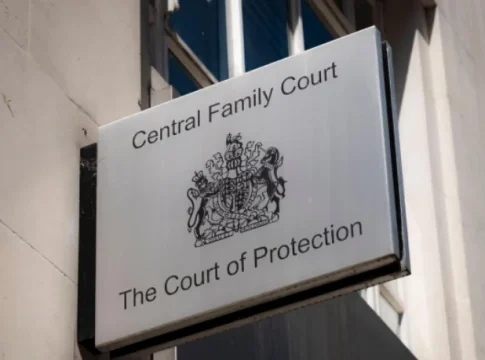
DoLS authorisations are granted by local authorities and can be challenged through the Court of Protection. Where someone wishes to challenge a DoLS order, legal aid is available on a non-means-tested basis under Section 21A of the Mental Capacity Act 2005, meaning the person’s income and assets do not affect their ability to access a solicitor for that challenge.
What the Cheshire West Ruling Established and Why It Has Now Been Overturned
The 2014 Cheshire West judgment introduced what became known as the acid test: if a person was under continuous supervision and control and not free to leave, they were considered to be deprived of their liberty under Article 5 of the European Convention on Human Rights, regardless of whether they appeared content or raised no objection.
The acid test was intended to protect vulnerable people from unlawful restrictions. In practice, it generated a significant volume of DoLS authorisations and created considerable operational pressures for local authorities and care providers. Crucially, it was also criticised for going beyond what the European Court of Human Rights had ever actually required.
On 2 June 2026, in AG for Northern Ireland [2026] UKSC 16, a seven-justice panel unanimously overruled Cheshire West. The acid test no longer applies. In its place, the Supreme Court has reinstated a multifactorial approach that considers the specific circumstances of the individual, including, critically, their own wishes and feelings regarding their care arrangements.
What the New Approach Means for DoLS
The shift is substantial. Under the new framework:
A person’s wishes and feelings are now central to the assessment. Where someone who lacks capacity nonetheless expresses contentment with their arrangements and shows no objection, this points away from a finding of deprivation of liberty. Where a person objects, that points strongly towards one.
Coercion is now the key concept. The Supreme Court has emphasised that Article 5 concerns situations in which a person’s will is being overridden. In the absence of coercion, it will often be difficult to establish that a deprivation of liberty is occurring.
The bright-line acid test is gone. What replaces it is a context-sensitive, case-by-case evaluation, which means that whether a DoLS authorisation is required now depends far more on the individual’s specific situation than on a fixed checklist.
What This Means for Existing DoLS Authorisations
There is no transition period. The Cheshire West acid test ceased to apply on 2 June 2026. This raises immediate questions for anyone involved in an existing DoLS authorisation:
Does the authorisation still reflect the correct legal test? An authorisation granted under the acid test may have been appropriate under that framework, but may now need to be reconsidered in light of the multifactorial approach.
Does the person’s situation still meet the threshold for deprivation of liberty? If the person in question is settled, content, and not subject to coercion, the answer under the new framework may be different from what it would have been under Cheshire West.
Is a challenge or review now appropriate? Where a DoLS order is in place and the person or their family has concerns about whether it remains necessary or lawful, a Court of Protection application may be the right step.
These are not straightforward questions to answer without legal advice, and getting that advice promptly matters given that the change has taken effect immediately.
How a Court of Protection Solicitor Can Help
Navigating a DoLS challenge or Court of Protection application is rarely straightforward, particularly now that the legal framework has changed. A specialist solicitor can assess whether an existing DoLS authorisation remains lawful under the new multifactorial test, advise on whether a challenge is appropriate, apply for legal aid on your behalf where it is available, and represent the person at the centre of the case, known as P, in any proceedings.
Where a situation is urgent, such as a disputed hospital discharge or an immediate concern about a care placement, solicitors experienced in this area can apply to the Court of Protection on an emergency basis.
Five firms with established practices in this area include:
Welford Solicitors are specialists exclusively in mental capacity law and Court of Protection health and welfare cases, acting for families across England and Wales. They handle DoLS challenges, emergency Court of Protection applications, and offer legal aid for Court of Protection cases, managing the full eligibility process on behalf of clients.
Duncan Lewis Solicitors is ranked by the Legal 500 UK for Court of Protection and mental capacity work, with offices across London and nationwide reach, including strong coverage across the South East and major urban centres.
Clarke Willmott is recognised in Chambers 2026, with specialist Court of Protection lawyers operating across London, Manchester, Bristol, Birmingham, Cardiff, Southampton, and Taunton.
Stephensons Solicitors, based in the North West with nationwide reach, is experienced in DoLS challenges, Section 21A Mental Capacity Act applications, and best interests disputes involving residence, care, and medical treatment.
Southerns Solicitors is based in Lancashire, with a specialist mental capacity and Court of Protection team holding legal aid contracts and Law Society Mental Capacity (Welfare) accreditation. They offer free initial telephone consultations and accept instructions from the Official Solicitor.
What to Do Now
If you are a family member or carer of someone currently subject to a DoLS authorisation, the most important thing is not to assume the existing arrangement is automatically still valid or automatically no longer required. The answer depends on the individual’s circumstances assessed against the new legal framework.
If you believe a DoLS order may no longer be necessary, or if you have concerns about whether a loved one’s restrictions remain lawful, speaking to specialist court of protection solicitors is the right first step. They can assess your situation against the new multifactorial test, advise on whether a challenge is appropriate, and manage legal aid applications where funding is available, meaning cost should not be a barrier to getting advice