Every new food product begins with an idea. Maybe it’s a new ice cream flavor, a protein-packed smoothie, or a snack made with an unusual ingredient. While the finished product might look simple sitting on a grocery store shelf, getting it there can take months or even years of development.
Food companies must consider much more than taste. A successful product must be safe, affordable, consistent, and practical to manufacture at scale.
Here’s how food and beverage ideas move from the drawing board to the grocery aisle.
Finding an Opportunity in the Market
Product development often begins with identifying something consumers want that existing products don’t fully provide.
Companies may study purchasing habits, survey shoppers, monitor food trends, or examine gaps in current product categories.
For example, growing interest in convenient, protein-rich foods might inspire a company to develop a ready-to-drink breakfast beverage. Another business might explore a new frozen dessert with a distinctive flavor or texture.
Before investing heavily in development, companies consider who would buy the product, where it would be sold, and whether it could compete with existing options.
A promising idea still needs a practical path to production.
Turning an Idea Into a Recipe
Once a concept has potential, food scientists and product developers begin creating formulations.
This stage involves balancing flavor, texture, appearance, nutrition, and cost.
A new beverage might taste excellent when prepared fresh but separate after several days in the refrigerator. An ice cream formulation might taste great but become too hard after freezing.
Developers experiment with ingredient proportions, processing techniques, and storage conditions to address these challenges.
Early testing often happens in small batches, where adjustments are relatively inexpensive.
Food companies may also conduct sensory evaluations, inviting participants to compare products based on taste, aroma, texture, and overall appeal.
The goal is to develop a recipe people enjoy and can manufacture consistently.
Why a Great Recipe Isn’t Enough
Making a few gallons of a beverage is very different from producing thousands of gallons.
Ingredients behave differently as batch sizes, mixing methods, heating conditions, and production times change.
For example, a sauce that heats evenly in a small kitchen pot may require a different approach in a large processing vessel. Similarly, a beverage’s texture or stability may change when processed using industrial equipment.
This is why companies don’t typically move directly from a successful kitchen recipe to full-scale commercial manufacturing.
They need an intermediate stage that reveals how a product behaves under realistic production conditions.
Pilot Production Bridges the Gap
Pilot-scale production allows food companies to test manufacturing processes before committing to larger production runs.
These systems reproduce important aspects of commercial manufacturing at smaller capacities.
For products requiring heat treatment, pilot testing helps developers understand how processing affects flavor, texture, consistency, and safety.
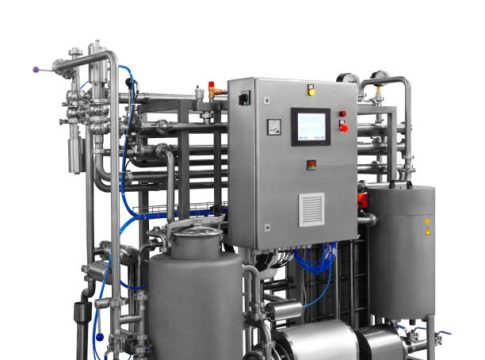
For example, an HTST pasteurization system designed for pilot-scale applications can help researchers evaluate how a product responds to controlled heating and cooling before transferring the process to a larger facility.
Pilot testing can reveal problems that may not appear during kitchen development, such as separation, unexpected thickness, or changes in flavor after processing.
Identifying these issues early can prevent expensive adjustments after a company has already invested in equipment, packaging, and distribution.
Food Safety and Shelf Life Testing
Before a product reaches consumers, manufacturers need evidence that it can be produced safely.
Depending on the food, this may involve evaluating microbial risks, processing controls, packaging integrity, and storage requirements.
Shelf life is another major consideration.
Companies need to understand how a product changes over time. Does its flavor deteriorate? Does its color change? Will the texture remain appealing? Can it maintain its intended quality under expected storage conditions?
Food scientists use stability studies, sensory testing, and other evaluations to establish appropriate shelf-life expectations.
A longer shelf life may create distribution advantages, but appropriate testing, not assumptions, must establish safety and quality.
Packaging Is Part of Product Development
Packaging influences much more than a product’s appearance.
It helps protect food from moisture, oxygen, light, contamination, and physical damage, depending on the product.
A beverage may require packaging that works with a particular filling process. Frozen foods need containers that withstand low temperatures, while shelf-stable products may require specialized packaging and processing.
Designers also consider how consumers will use the product.
Easy-open closures, resealable packages, portion sizes, and storage convenience can all influence buying decisions.
Packaging must also accommodate required labeling, including ingredient information, nutrition facts, and allergen disclosures.
Moving Into Full-Scale Production
After successful development and testing, manufacturers prepare for commercial production.
This stage may involve selecting suppliers, establishing quality standards, training employees, and confirming that production equipment can consistently meet product requirements.
Companies also need to estimate costs accurately.
Ingredient prices, labor, energy, packaging, transportation, and manufacturing losses can all affect profitability.
A product that performs well in development may need additional adjustments to remain commercially viable without sacrificing quality.
Getting the Product Onto Store Shelves
Manufacturing is only part of the journey.
Companies need distribution arrangements, retail buyers, inventory planning, and marketing strategies.
Some brands begin by selling through independent retailers or regional grocery chains before pursuing national distribution.
Others use online sales, farmers markets, or specialty stores to test consumer demand.
After a product launches, feedback from shoppers and retailers can shape future changes to flavor, packaging, pricing, or positioning.
Innovation Takes More Than a Good Idea
Creating a new food or beverage requires creativity, science, engineering, and business planning.
The recipe might capture consumers’ attention, but the work behind it determines whether the product can be manufactured safely and reliably.
From early kitchen experiments to pilot-scale testing and commercial production, each stage helps transform a promising concept into something customers can bring home and enjoy.