Businesses in Brazil deal with a wide range of administrative, financial, technical, and regulatory activities. From controlling everyday operations to preparing financial projections and performing construction calculations, professionals often need reliable ways to organize information and reduce repetitive work.
Although specialized software is available for many tasks, Excel remains widely used because of its flexibility. A spreadsheet can be adapted to different industries, company sizes, and professional requirements without requiring the implementation of an entirely new system.
Using Ready-Made Templates Instead of Starting From Scratch
Creating a professional spreadsheet from a blank workbook can require considerable time. Users may need to develop formulas, validation rules, calculation areas, reports, charts, and dashboards before the file is ready for practical use.
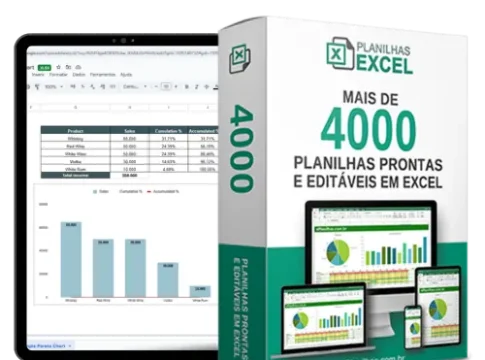
For professionals who prefer to begin with an existing structure, Excel spreadsheet templates for Brazilian businesses can provide practical models for financial management, administration, engineering, planning, inventory control, and many other activities.
A ready-made structure can reduce setup time while preserving the flexibility that makes spreadsheets useful. Users can enter their own information, adapt categories when appropriate, and use the workbook as a foundation for recurring processes.
Supporting Construction and Engineering Activities
Technical professionals frequently work with information that must be organized consistently. Construction projects may involve measurements, classifications, calculations, cost information, and requirements established by Brazilian technical standards.
When similar calculations need to be performed repeatedly, a specialized NBR 12721 calculation spreadsheet can help organize project data within a structured workflow.
This can reduce repetitive work and make information easier to review between different projects. Instead of rebuilding formulas and calculation tables every time, professionals can begin with an established model and adapt the inputs to the specific project.
Technical spreadsheets should always be used together with professional expertise and current technical requirements, but they can provide valuable support for organizing calculations and documentation.
Improving Tax Planning and Scenario Analysis
Brazilian companies also face considerable complexity when analyzing taxation. Revenue, expenses, margins, business activities, and the applicable tax regime can influence financial results.
A Brazilian tax planning spreadsheet can help businesses organize relevant variables and compare different scenarios in a structured format.
Scenario analysis can be useful before discussing alternatives with accounting or tax professionals. Instead of evaluating isolated numbers, managers can organize assumptions in one place and better understand how different variables affect the business.
Why Spreadsheets Remain Relevant
One of the main advantages of spreadsheets is that they can combine organization, calculation, and reporting in a single file. Formulas can automatically calculate totals, percentages, balances, projections, and other indicators whenever information is updated.
Charts and dashboards can also transform detailed records into visual summaries that are easier to interpret. This can help professionals identify trends, unusual results, or areas that deserve additional attention.
Templates are especially useful for recurring activities. When the same structure is used consistently, comparing results between months, projects, or business scenarios becomes much easier.
Spreadsheets can also complement accounting software, ERP platforms, engineering software, and other specialized systems. They remain useful for customized calculations, temporary analyses, simulations, and reports that may not be available in the primary system.
For Brazilian professionals and businesses, structured Excel templates can therefore provide a practical balance between flexibility and organization. When combined with accurate data and appropriate professional review, they can reduce repetitive work, improve consistency, and support better decision-making.