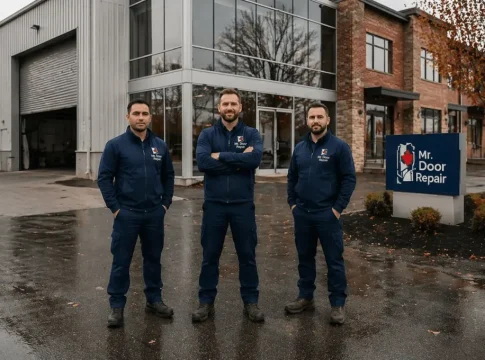
An automated commercial entrance plays an essential role in daily business operations. Whether serving a busy retail store, a medical clinic, an office building, or an industrial facility, automatic sliding and swinging doors provide seamless, hands-free access for customers, visitors, and staff. They support accessibility compliance, assist in maintaining indoor climate control, and manage steady streams of foot traffic without friction.
When an automatic commercial door suddenly stops working, the operational impact is immediate. A door stuck open exposes the facility to outdoor elements, compromises interior heating or cooling, and creates a significant security vulnerability. Conversely, a door stuck blocked access entirely, inconveniencing customers, impeding emergency egress pathways, and directly impacting business revenue. Knowing how to assess the failure safely, execute basic troubleshooting, and secure professional service minimizes downtime and keeps your facility safe.
Immediate Safety and Triage Steps
When an automatic door system fails, your first priority must be securing the doorway and preventing injury to visitors or employees. Automatic door leaves are heavy, and malfunctioning motion sensors or drive motors can cause unpredictable movements.
1. Clear the Area and Ensure Safety
If the door is partially open, chattering, or closing forcefully, post clear signage or erect temporary barriers to redirect pedestrian traffic to an alternative entry point. Never attempt to force a powered door system open or closed manually while the electrical supply remains active, as sudden motor engagement can cause severe injury or damage internal drive belts and gears.
2. Check the Power Switch and Operation Modes
Many automatic door failures stem from accidental switch toggling rather than actual mechanical breakdown. Most commercial automatic door headers feature a hidden or key-operated function switch near the frame. Verify that the switch selector has not been bumped into “Hold Open,” “Off,” “One-Way,” or “Night Mode.” Toggling the switch back to “Auto” or “Two-Way” frequently resolves simple operational halts.
3. Perform a Power Cycle Reset
Modern automatic door operators utilize electronic control boards that can experience temporary software glitches, power surge lockouts, or safety sensor loops. Locating the dedicated circuit breaker or key switch, powering the system off completely for 30 to 60 seconds, and turning it back on forces the control board to execute its startup diagnostic sequence, often clearing minor communication errors.
Common Causes of Automatic Door Malfunctions
Understanding the core mechanical and electronic components of an automated entry system helps facility managers communicate effectively with service technicians and spot recurring issues early.
Sensor and Safety System Interference
Automatic doors rely on dual-technology sensors, typically combining microwave motion detection for opening with active infrared presence detection for threshold safety. If a door remains stuck open or cycles continuously without anyone nearby, sensor interference is often the cause.
- Optical Obstructions: Dust, spider webs, airborne debris, or rain droplets on the sensor lens can register as a constant physical presence, preventing the door from closing.
- Reflective Distractions: Highly polished floors, reflective holiday displays, or shifting sunlight hitting the sensor field can trigger ghost openings.
- Threshold Obstructions: Small stones, dirt accumulation, or raised floor mats in the door track disrupt safety beams located along the bottom frame.
Mechanical Track and Roller Wear
Over thousands of daily cycles, the heavy steel rollers carrying the glass door leaves along the upper aluminum header track experience gradual wear. Dirt and grime build up inside the track header, causing increased friction. This added resistance forces the motor to draw excess current, triggering internal safety overloads that shut the system down mid-cycle.
Drive Belt and Motor Fatigue
Automatic sliding doors rely on reinforced rubber timing belts to transfer motion from the electric motor to the door hangers. Over years of operation, these belts can stretch, lose tension, or shed teeth. Symptoms of drive belt degradation include jerky door movement, loud grinding noises within the header box, or a motor that hums continuously without moving the door leaves.
When to Call for Qualified Technical Service
While checking power switches, clearing track debris, and cleaning sensor lenses fall within standard facility maintenance tasks, internal operator repairs should strictly be left to certified technicians. Commercial automatic doors operate under high mechanical tension and complex electrical standards governed by strict safety codes.
Attempting to disassemble upper header assemblies, bypass electronic safety sensors, or adjust internal drive motor force controls without proper training risks severe personal injury, voids manufacturer warranties, and exposes property owners to significant legal liability.
When basic troubleshooting fails to restore normal operation, partnering with certified specialists for commercial door repair toronto ensures that electronic control boards, motor gearboxes, and safety sensors are repaired in full compliance with municipal building codes and accessibility standards.
Long-Term Maintenance and Prevention
Preventing sudden door failures requires moving from reactive repairs to a structured preventative maintenance program. Regular service extends component life, protects building security, and ensures continuous operational compliance.
Daily and Weekly Inspection Checklist
Facility managers should implement simple weekly operational checks to spot wear before it leads to system failure:
- Walk toward the door at a normal pace to confirm sensor detection range and smooth opening response.
- Stand in the threshold zone while the door is open to verify that safety presence sensors keep the door stationary.
- Inspect threshold floor tracks for accumulated dirt, gravel, or debris, vacuuming channels weekly.
- Listen for unusual grinding, squealing, or scraping noises during the opening and closing cycles.
Bi-Annual Professional Servicing
Scheduling professional inspections every six months allows technicians to inspect internal roller bearings, check drive belt tension, test backup battery power supplies during power outages, and adjust closing speeds with specialized equipment. By maintaining a proactive care schedule, commercial properties ensure their automated entrances remain safe, reliable, and welcoming for every visitor.