The way people discover, research, and buy products has changed significantly over the past decade. A customer who once relied on a recommendation from a friend or a visit to a physical store can now compare dozens of options within minutes using a smartphone.
For businesses, this shift has created both opportunities and challenges. A strong product is still important, but customers also expect businesses to be easy to find, easy to understand, and easy to interact with online.
As technology continues to evolve, businesses are increasingly adapting their digital presence to match changing customer expectations.
Websites Have Become More Than Digital Brochures
A business website used to function primarily as an online introduction to a company. Today, it can play a much larger role in the customer journey.
Customers may use a website to compare products, read educational content, check pricing, request information, make appointments, or complete purchases. This makes website usability an important part of the overall customer experience.
A modern website needs to work across different screen sizes, load efficiently, and make important information easy to find. Navigation should be intuitive, while calls to action should guide visitors toward useful next steps.
Businesses investing in modern web design and development can create digital experiences that combine visual presentation with functionality, performance, and usability.
The goal is not simply to make a website look attractive. It is to create a digital environment that helps visitors understand the business and take action.
Search Behaviour Is Changing
Search engines remain one of the most common ways people find businesses and information. However, search behaviour is becoming more diverse.
Consumers may use traditional search engines, local search, social platforms, video platforms, or increasingly AI-powered tools to find answers.
This means businesses need to think carefully about the information they publish online. Content should answer real questions, provide useful information, and be organised in a way that both people and search systems can understand.
Search engine optimisation can support this process by improving areas such as technical website performance, content structure, internal linking, and organic visibility.
The focus should not simply be on ranking for as many keywords as possible. A more useful approach is to understand what potential customers are searching for and create resources that genuinely address those needs.
Social Media Has Changed Brand Discovery
Social media has also changed the way people discover products and services.
A customer might encounter a brand through a short video, a creator recommendation, a customer review, or a post shared by someone they follow. This can happen long before the customer visits the company’s website.
This creates new opportunities for smaller businesses that may not have large advertising budgets. Useful or entertaining content can help brands reach audiences organically, while paid social campaigns can extend the reach of successful content.
However, businesses should avoid treating every platform as identical. The type of content that works on a professional networking platform may not work on a short-form video platform.
Understanding the behaviour and expectations of each audience is more useful than simply publishing the same content everywhere.
Personalisation Is Becoming More Important
Customers increasingly expect digital experiences to be relevant to their interests.
An ecommerce website might recommend related products based on browsing behaviour. An email campaign can present different offers to different customer groups. A content platform can suggest articles based on previous interactions.
Personalisation can improve the customer experience when it is used thoughtfully. Businesses should still be transparent about how customer data is collected and used, while giving users appropriate choices.
The objective should be to make digital interactions more useful rather than simply increasing the number of messages customers receive.
Data Can Improve Marketing Decisions
Digital channels provide businesses with something traditional marketing often struggled to provide: detailed information about customer behaviour.
Businesses can see which pages attract visitors, which campaigns generate traffic, where users leave a website, and which channels contribute to conversions.
This information can help businesses make better decisions about where to invest time and money.
For example, if a company discovers that a particular type of educational content consistently attracts qualified visitors, it may decide to create more content around that topic. If a landing page receives substantial traffic but few enquiries, the page may need to be redesigned or its messaging reconsidered.
Data does not replace creativity, but it can provide useful evidence for deciding what to test next.
Digital Marketing Is Becoming More Connected
As the number of online channels grows, businesses are increasingly looking at their digital presence as one connected ecosystem.
Website development, SEO, social media, paid advertising, content, analytics, and conversion optimisation can all influence one another.
A successful campaign may bring visitors to a website, while analytics can reveal how those visitors behave. Search data can identify new content opportunities, while customer feedback can influence website messaging.
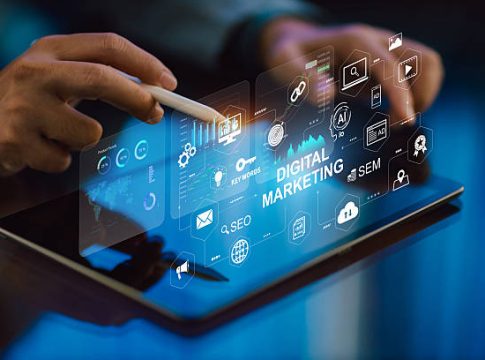
These connections are at the centre of modern digital marketing strategies, where different channels are used together rather than treated as isolated activities.
Adapting Without Chasing Every Trend
Digital technology changes quickly, and businesses can easily feel pressure to adopt every new platform or tool.
But not every trend is relevant to every company.
A local service provider may benefit more from strong local search visibility and a well-designed website than from trying to build an audience on every social platform. An ecommerce business may prioritise product content, paid advertising, email marketing, and customer retention.
The most effective approach is often to understand where customers spend their time, what information they need, and which digital channels can help the business serve those needs.
Technology will continue to change the customer journey. Businesses that focus on useful experiences, clear communication, strong digital foundations, and measurable results will be better positioned to adapt as those changes continue.