Honestly, a few years ago if someone told me a robot would help grade my essays or even suggest the next book I should read, I’d probably laugh and scroll past it on TikTok. But here we are, and AI is basically sneaking into every corner of education. From online courses to full-on virtual classrooms, artificial intelligence isn’t just some sci-fi fantasy anymore — it’s actually making students’ lives both easier and, well, sometimes a little weirder.
Personalized Learning, Finally
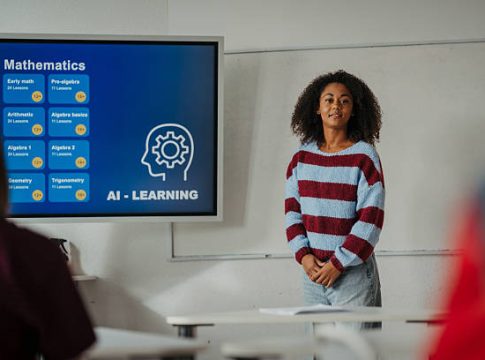
One thing that’s kind of insane but also cool is how AI can basically be your personal tutor. I remember struggling with algebra back in high school — I mean, who doesn’t? But now, platforms powered by AI can actually look at where you mess up and adjust the lessons for you. It’s not just giving everyone the same worksheet like in the old days. It’s like having a teacher who actually notices you zoned out during that 45-minute lecture on fractions. People online are buzzing about this too — Reddit threads are full of students sharing AI tools that “actually make sense” and not just spit out random solutions.
But here’s the funny part, sometimes it’s a little too good. My cousin once spent hours talking to an AI bot that was supposed to help with essay writing. He ended up arguing with it about whether Shakespeare was actually overrated. He says it felt like debating with a slightly smarter, sassier version of his teacher. I laughed so hard because, honestly, same energy.
Making Education More Inclusive (Kinda)
Another angle that’s actually pretty underrated is accessibility. Think about students who have learning disabilities or those who just can’t attend school regularly. AI can transcribe lectures in real time, summarize long texts, or even read stuff aloud. It’s like giving everyone a seat in the front row, even if they’re on the other side of the planet. Social media has some crazy examples — like Twitter threads where people show AI tools turning textbooks into podcasts for blind students. Not gonna lie, that’s actually pretty dope.
But, let’s not pretend it’s perfect. AI still struggles with context sometimes. I saw one AI misinterpret a history essay and turn a point about the Cold War into a story about frozen chicken. Not joking. It’s funny but also a little scary because that could easily happen on an actual assignment.
Teachers Are Not Dead, Calm Down
Some people freak out and say “AI will replace teachers!” but nah, that’s not exactly true. If anything, AI is more like that weird new coworker in the office — it helps with repetitive stuff so humans can focus on the real, messy, creative work. Grading, organizing homework, tracking attendance, even spotting which students might need extra help — AI can do all that, but it can’t give that “you’ve got this” pep talk before a test or read the room when someone’s struggling emotionally.
Also, I saw some TikTok where a teacher used AI to generate a lesson plan in minutes and then just added her own funny jokes and memes. Students actually enjoyed the class more. Proof that AI can’t replace that human touch, just make it way easier to show it.
Data Overload, but Useful
Here’s something no one really talks about — AI is basically a data beast. It can track everything from what assignments students do well on, to how long they stare at a particular problem before giving up. This sounds a little Big Brother-ish, and yeah, it kinda is, but if used right, it can actually help schools make smarter decisions. Like, instead of assuming every student learns the same way, they can tweak teaching methods based on actual trends.
I’ve also seen some parents freak out about privacy — understandably. But honestly, the same worries come up with every new tech. The difference is, if schools figure out the balance, students might actually end up learning faster without feeling like they’re under a microscope.
Future-Proofing Skills
The last thing, which I think is huge, is how AI in education is helping students actually get ready for the future. Let’s be real — knowing random dates in history is cool, but coding a simple AI, understanding data trends, even just using AI tools effectively — that’s going to matter way more in most careers. Some online courses are teaching kids to interact with AI safely and creatively, which is wild if you think about how quickly tech is moving. People online are calling it “learning the internet 2.0,” which is kind of hilarious but accurate.
Of course, there are downsides — overreliance on AI could make students lazy or less creative if it’s not balanced properly. But I feel like if schools can teach students how to use AI as a tool rather than a crutch, it could really change education for the better.
At the end of the day, AI in classrooms isn’t about replacing humans, it’s about amplifying what’s already possible. Smarter learning, better accessibility, more personalized experiences — it’s messy, sometimes funny, sometimes weird, but definitely not going away. And honestly, I’m kind of excited to see where it goes next, even if my algebra struggles haunt me forever.