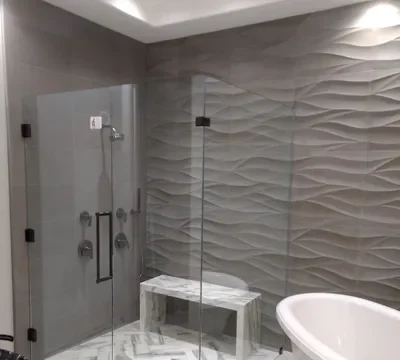
Thicker glass can make a shower feel more solid, but extra weight is not always an advantage. Two common choices, 3/8-inch and 1/2-inch glass, look much alike until the door starts moving. Knowing how each thickness affects support, cost, and daily use helps homeowners pick the right enclosure for their bathroom.
What Changes Between 3/8-Inch and 1/2-Inch Glass?
An extra eighth of an inch sounds minor, yet 1/2-inch glass weighs about one-third more than 3/8-inch glass at the same height and width. That added weight changes how much force a hinge must handle and how installers secure fixed panels. Both options can be made from tempered safety glass, so thickness alone does not determine whether a door meets safety standards. Greater thickness usually makes a panel feel stiffer when pushed, while 3/8-inch shower door glass already provides enough rigidity for many residential openings. Ultimately, the size and shape of the enclosure matter more than choosing the thickest available glass.
Why Three-Eighths Glass Works for Many Frameless Showers
Many frameless shower doors use 3/8-inch tempered glass because it provides a clean appearance without excessive weight. Proper hinges and clamps can support the panel while keeping the hardware less noticeable. Homeowners may find that a 3/8-inch swinging door feels easier to operate than a heavier door of identical dimensions. Manufacturers also offer a broad range of compatible hinges, seals, and handles for this thickness. Those options give installers more flexibility when planning an enclosure around the bathroom’s layout.
Compact showers especially benefit from keeping weight under control. Narrow wall sections, tight door clearances, and angled layouts can limit where installers place hinges or supports. A lighter panel does not excuse weak framing, but it reduces the load compared with a same-size half-inch door. Custom measurements still determine whether the hardware will perform properly. Even a straightforward frameless design needs enough space for the door to swing without striking a toilet, vanity, or towel bar.
Where Half-Inch Panels Actually Make Sense
Half-inch glass becomes useful when a design calls for taller or wider panels that would feel too flexible at a thinner size. Its extra stiffness can give large fixed sections a more substantial feel, especially in spacious walk-in showers. Designers sometimes prefer its heavier appearance alongside thick stone or large-format tile. However, a half-inch swinging panel puts more weight on its hinges and anchoring points, so bigger is not automatically better. Panel dimensions, wall construction, and the manufacturer’s hardware ratings should guide the decision.
Can the Same Hardware Support Both Thicknesses?
Glass does not carry itself. Hinges, brackets, and wall anchors transfer the weight of a swinging door into the surrounding structure. Strong backing behind tile is often necessary, and installers must consider exactly where the fasteners land. Mounting points that work with 3/8-inch glass might not support an equally sized 1/2-inch panel. Hardware also needs to accommodate the chosen thickness; forcing a mismatched clamp or gasket can damage glass edges or create movement over time.
Sliding systems add another set of limits because rollers and tracks have specific weight capacities and glass-size requirements. For sliding glass door replacement within a shower enclosure, a thicker panel may require a different rail, roller assembly, or guide rather than just a larger sheet of glass. Extra weight can make poorly matched rollers wear faster and doors harder to move. Installers should follow the enclosure manufacturer’s specifications instead of assuming that all sliding hardware works with both thicknesses.
The Price Gap Is More Than the Glass
Material costs typically increase with half-inch glass because each panel uses more material and weighs more during transportation and handling. Heavy-duty hinges or additional supports can increase the total as well. Quotes should therefore compare complete enclosures, including glass fabrication, edge finishing, hardware, and labor, rather than only the price per square foot. Decorative finishes, special cuts, and unusual angles may affect the estimate more than the thickness difference. Budget-conscious homeowners often get better value by paying for the thickness their layout needs instead of automatically upgrading.
What Should Homeowners Check Before a Replacement?
Measurements start with the finished shower opening, not the dimensions printed on an old door. Walls can lean slightly, curbs may slope for drainage, and tile can reduce the available width. These details affect panel clearances and where seals will sit. Replacing an existing door may also change how water stays inside the enclosure, especially if the old design used a bottom track or overlapping panels. Accurate measuring helps prevent a new door from dragging, leaking, or contacting nearby fixtures.
Switching from 3/8-inch to 1/2-inch glass calls for more than selecting a thicker replacement panel. Existing hinges and clamps may have different weight and thickness limits, and holes drilled into tempered glass cannot be altered afterward. Reusing old hardware without checking its rating risks poor alignment or damage. During shower door installation, professionals should verify the support behind finished walls, required gaps, handle placement, and the door’s full range of movement before ordering custom glass.
Finding the Right Glass Thickness for the Bathroom
Appearance matters, but a glass enclosure also needs to suit how people use the bathroom. Families with frequently used showers may appreciate a well-supported 3/8-inch door that moves smoothly, while a large fixed panel could justify 1/2-inch glass for greater stiffness. Selection should depend on the opening, available support, and hardware requirements rather than appearance alone. Huntsville Glass offers custom framed, semi-frameless, and frameless shower enclosures for homeowners in Huntsville and surrounding areas. Its glass services help customers compare suitable thicknesses, door configurations, and hardware options for new enclosures or shower door replacement projects.